
At first glance, many technicians assume GODIAG GT100 is simply an OBD extension tool. In reality, it’s a multi-functional diagnostic interface designed to improve safety, efficiency, and flexibility in advanced automotive work.
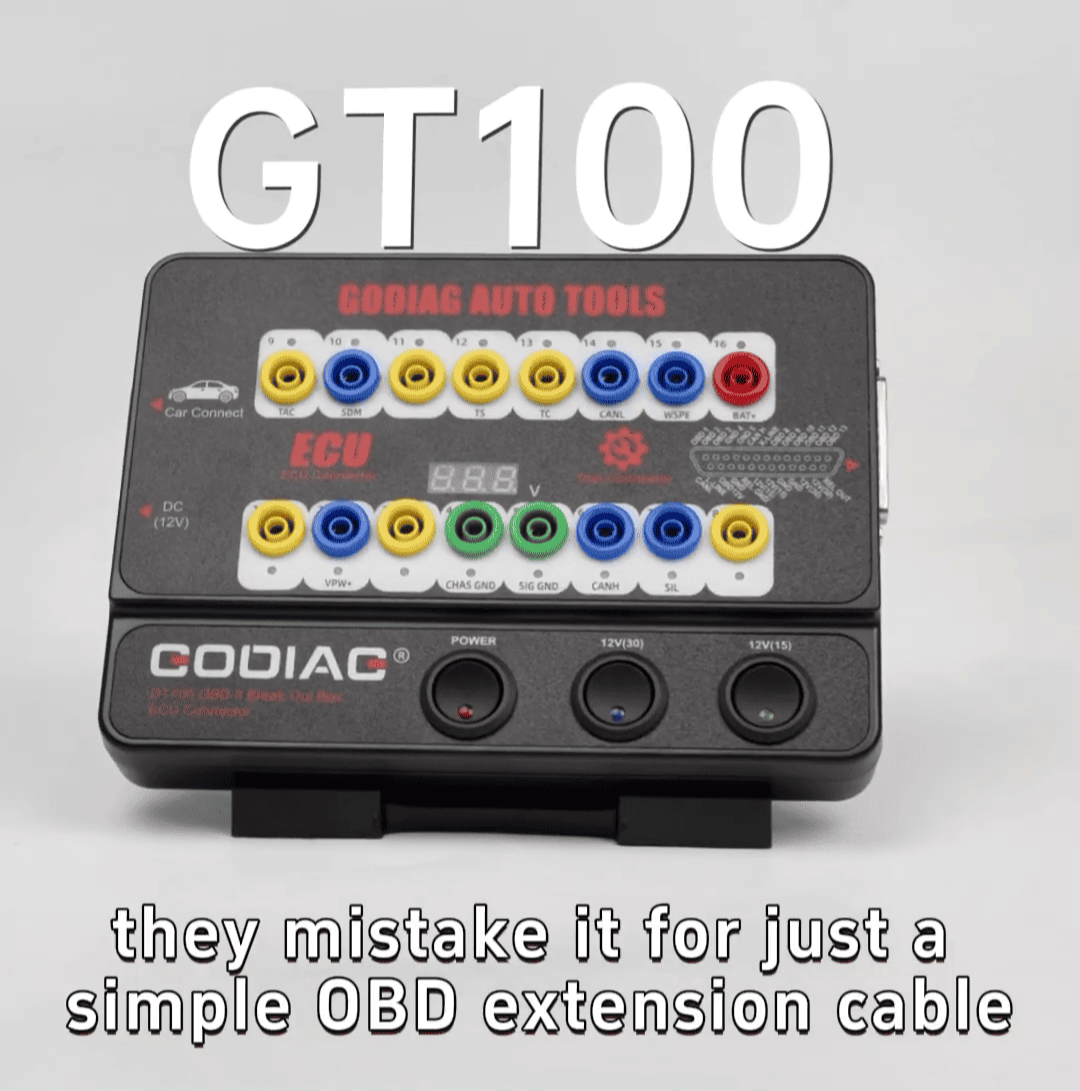
By understanding its physical interfaces and engineering logic, you’ll see why it’s considered essential equipment on a professional workbench.
Scenario 1: Base-Level Signal Detection Before Diagnostics
Connecting an expensive diagnostic scanner directly to an unknown or faulty vehicle can be risky. Electrical faults may damage the tool.
GODIAG GT100 ECU Connector solves this by providing:
16 color-coded banana plug ports
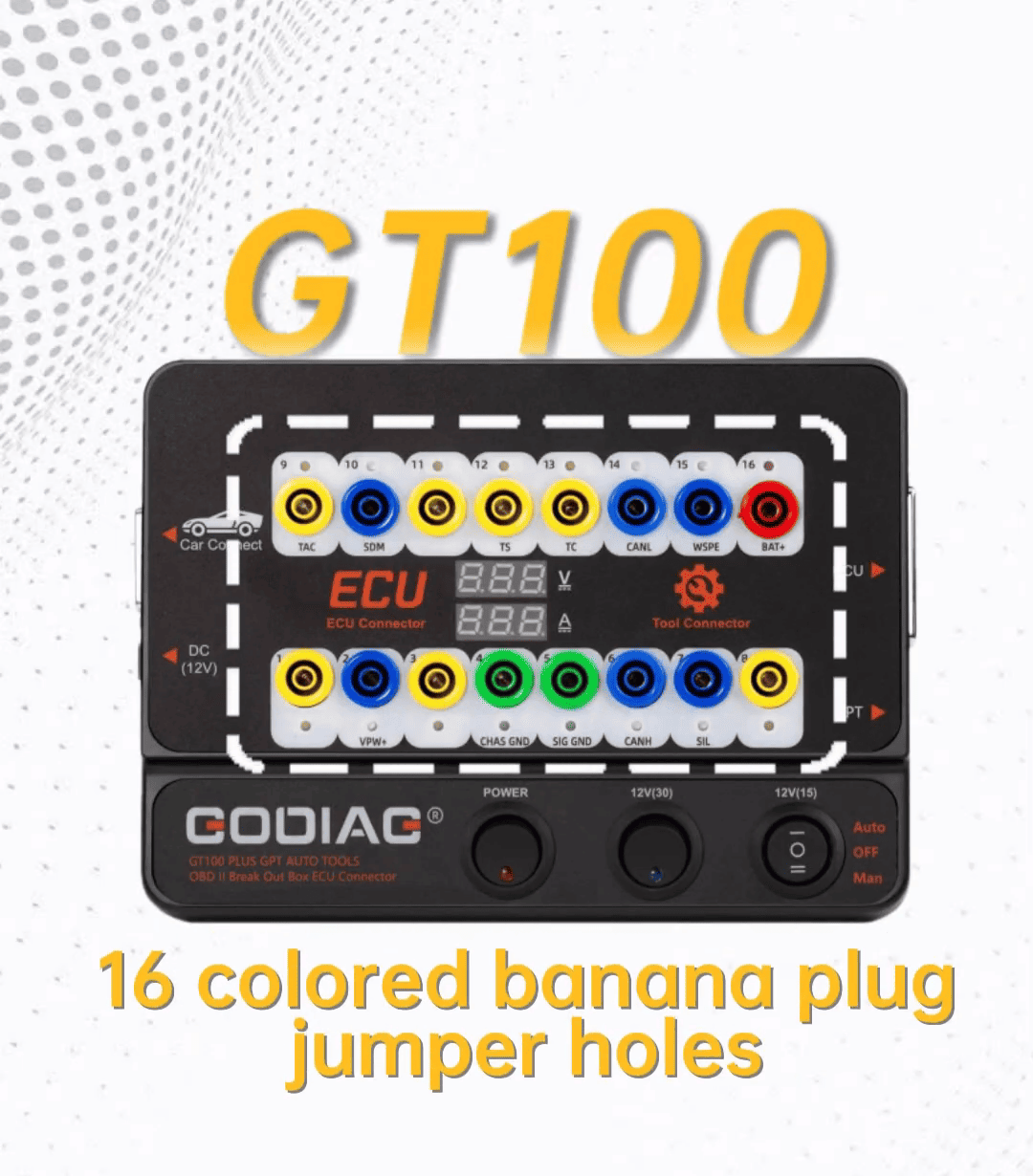
Direct mapping to the vehicle’s OBD 16-pin interface
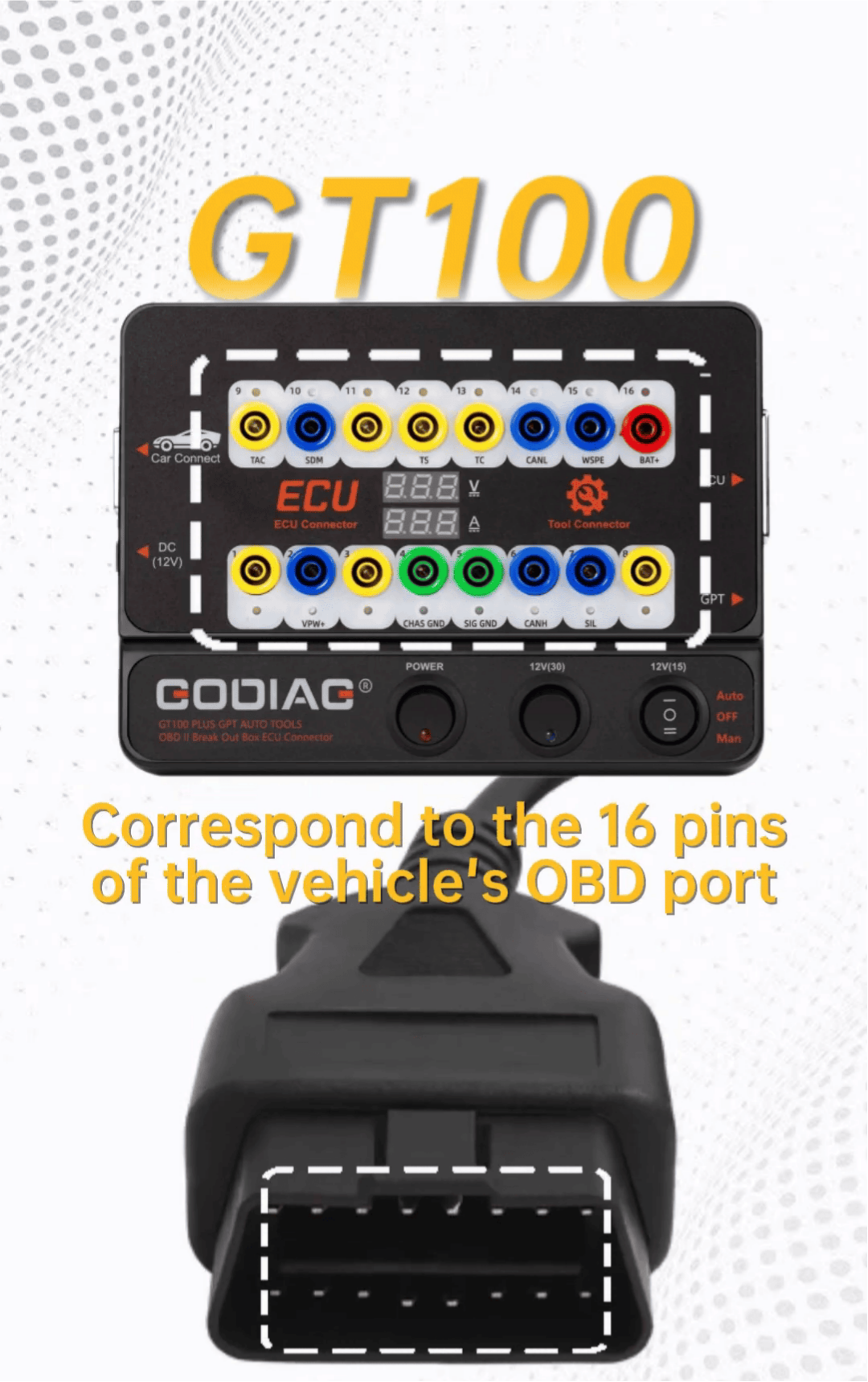
This allows technicians to:
Measure voltage and ground safely
Use a multimeter or oscilloscope without damaging wiring
Capture CAN bus signals and detect short circuits
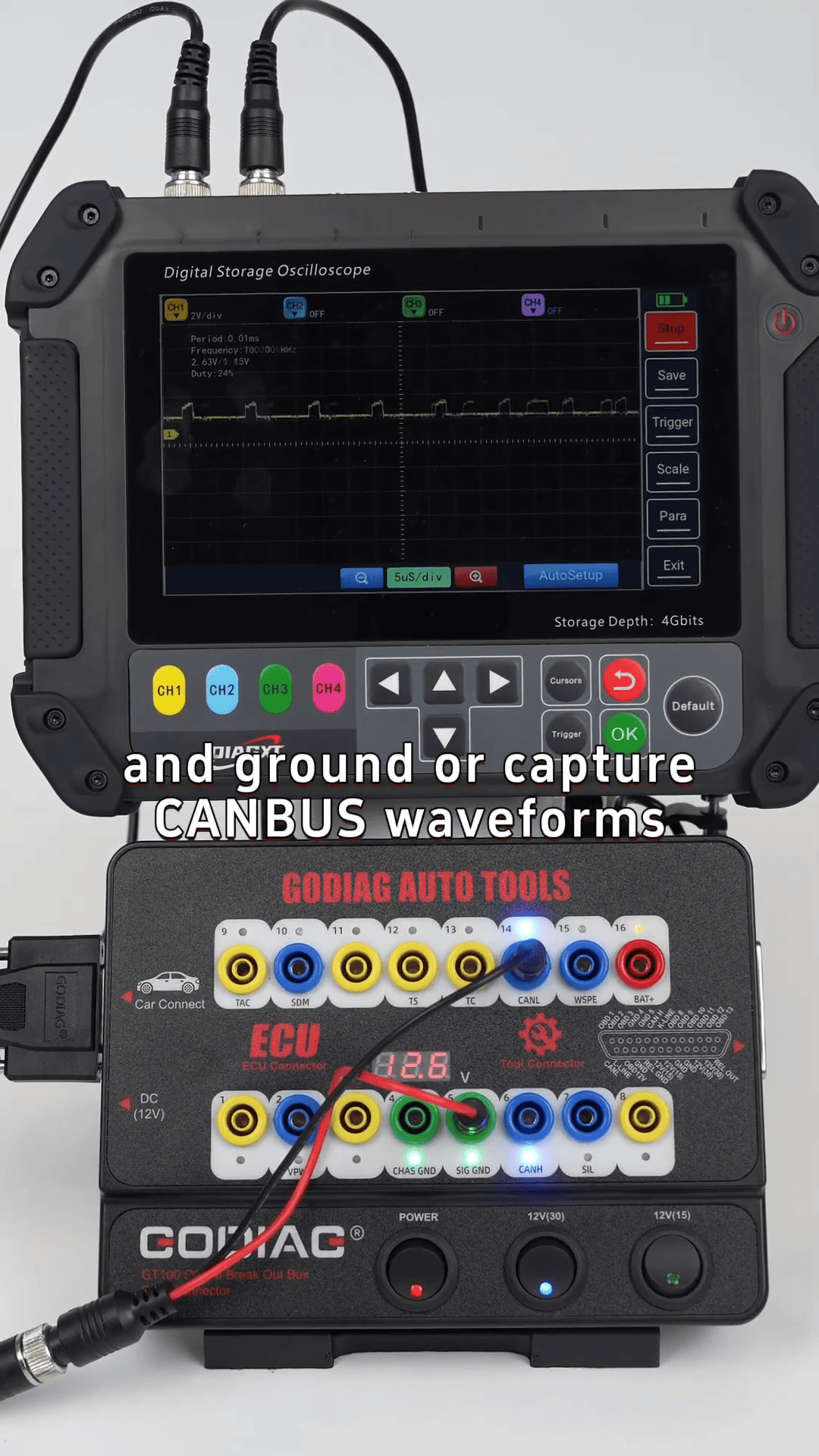
No need to strip or pierce factory wires.
Scenario 2: Bench Mode ECU Operations
When performing ECU repair, cloning, or flashing, modules are often removed from the vehicle. But how do you power and communicate with them?
The GT100 enables:
Stable power supply to ECUs on the bench
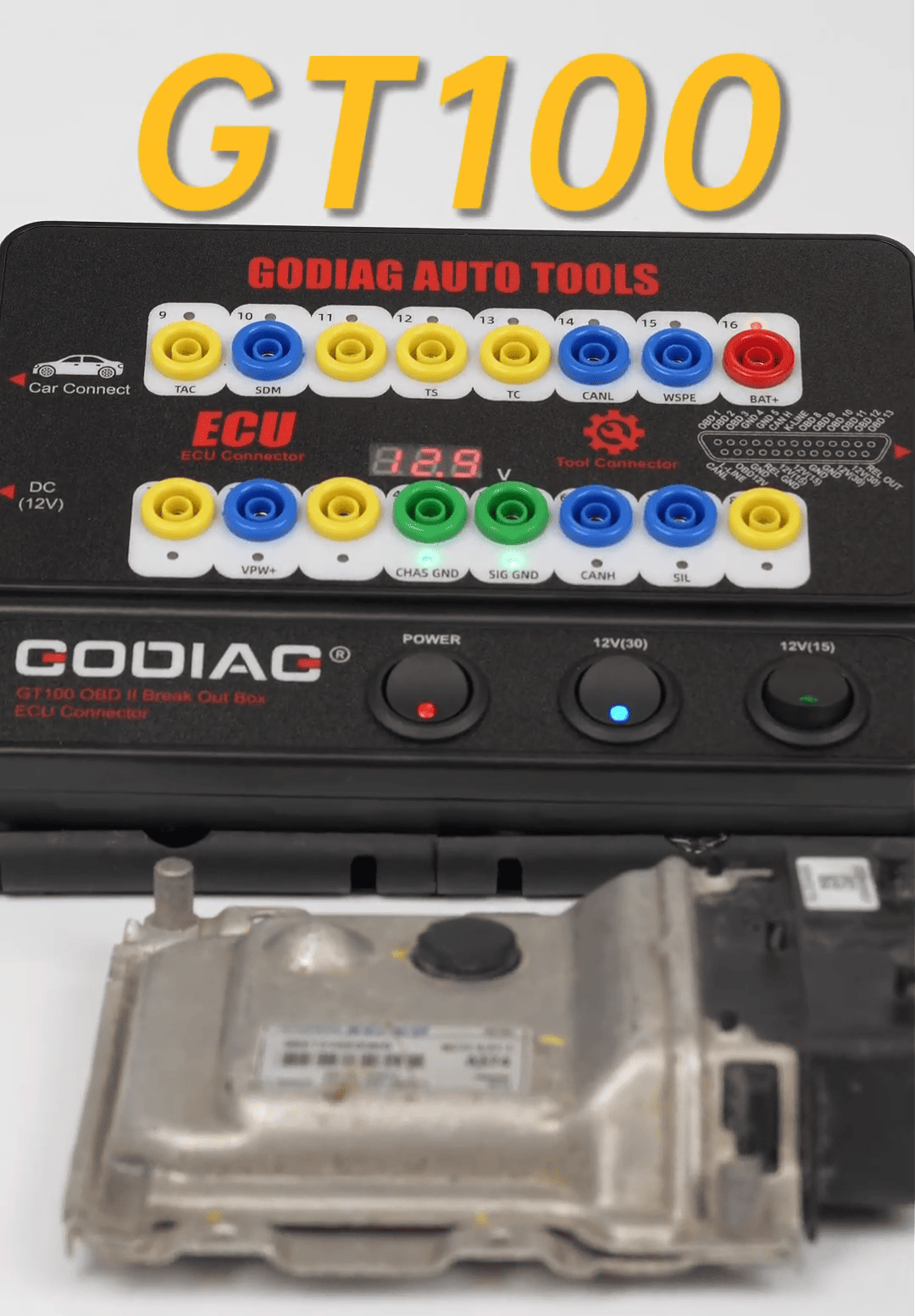
Direct communication via jumper cables
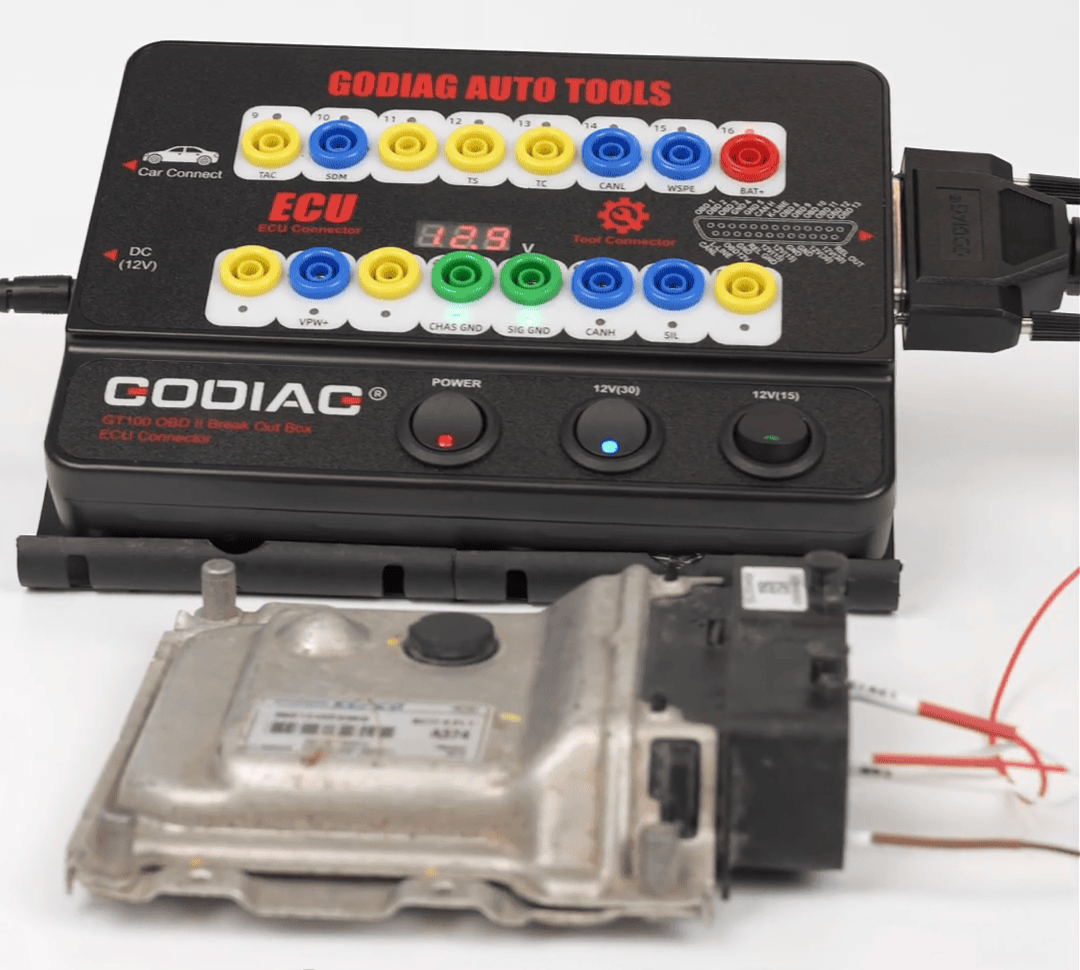
By connecting:
GT100 AUTO TOOLS → ECU pins (via color-matched cables)
You can simulate a real vehicle environment right on your desk.
Scenario 3: Multi-Module Immobilizer Synchronization
Advanced immobilizer jobs often require multiple modules to communicate simultaneously.
Examples include:
VAG IMMO4 all keys lost
BMW immobilizer synchronization
With the GT100:
Connect ECU, cluster, and IMMO modules together on the bench
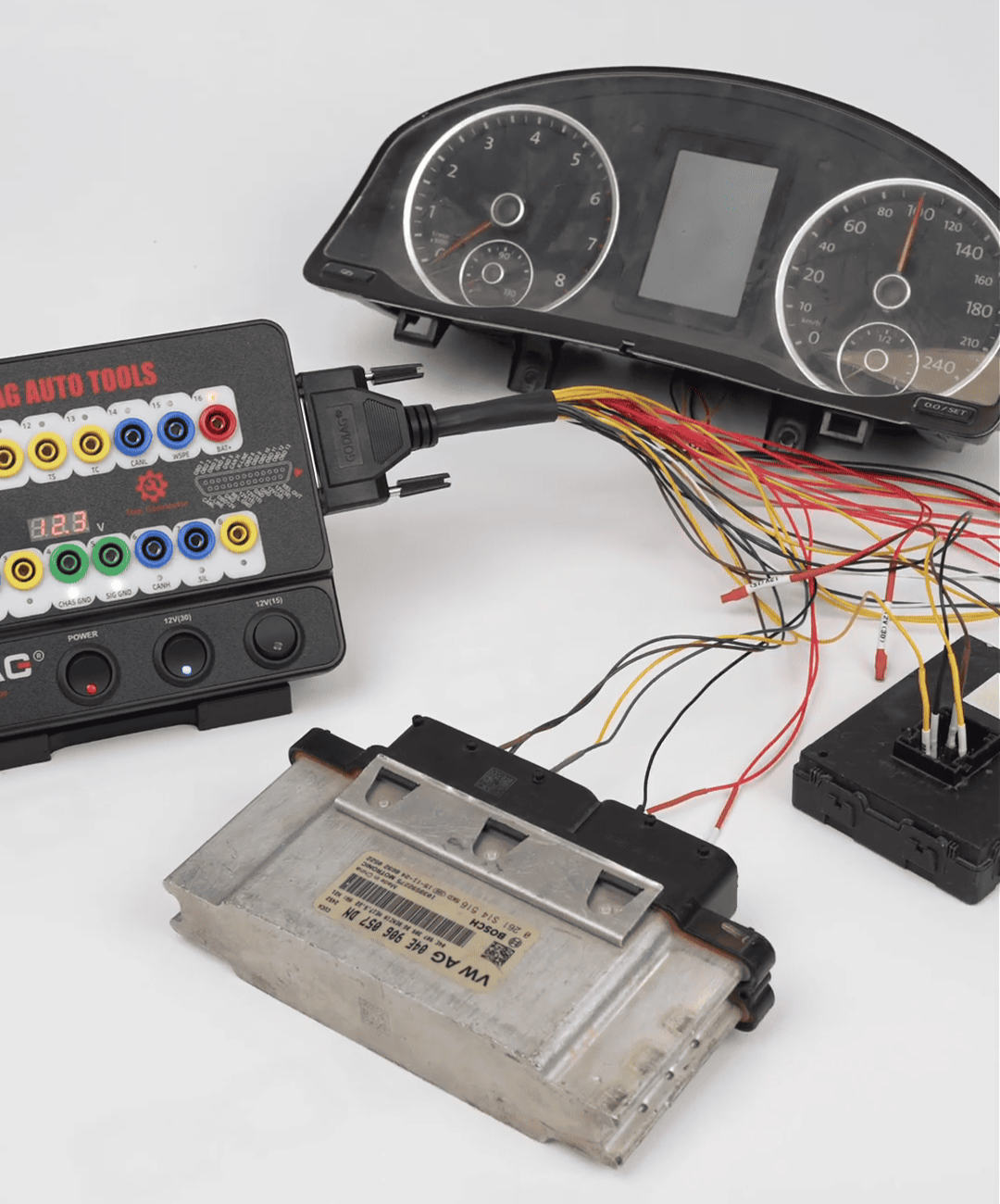
Create a local communication network
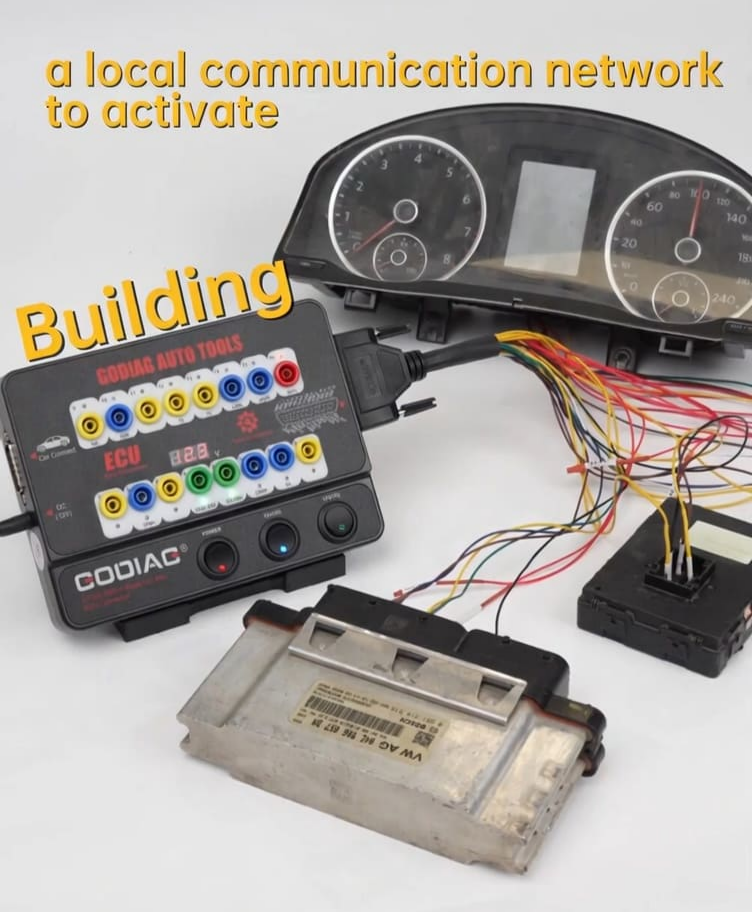
Perform synchronization without relying on vehicle wiring
This is especially useful when the vehicle wiring is damaged or unavailable.
Scenario 4: Memory Protection During Battery Replacement
Modern vehicles are highly sensitive to power loss. Disconnecting the battery may cause:
- Module resets
- Loss of learned data
- Immobilizer issues
GT100 provides a practical solution:
Connect an external backup battery
Supply reverse power via OBD port
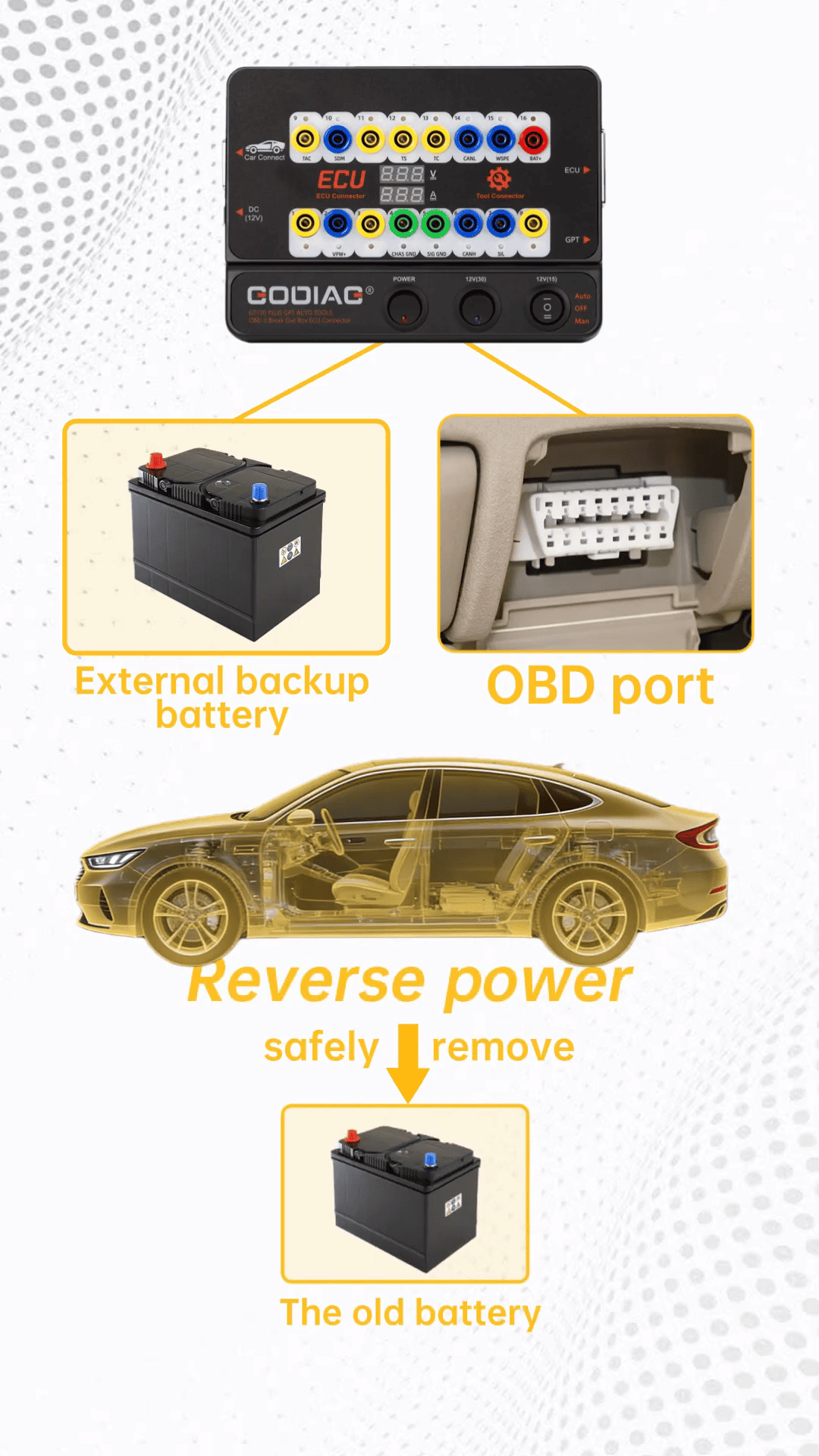
This keeps all control units powered while replacing the battery, preventing data loss.
Who Is the GT100 For?
1. Advanced Technicians
Using oscilloscopes or multimeters for signal analysis
2. Automotive Locksmiths
Performing immobilizer synchronization and bench programming
3. ECU Tuners
Requiring stable communication for reading and writing ECU data
GODIAG GT100 OBD II ECU Connector is not a magic repair tool—it won’t fix vehicles automatically. Instead, it acts as critical infrastructure, helping professionals:
- Reduce electrical risks
- Improve diagnostic accuracy
- Expand their technical capabilities
Understanding how to use it properly can significantly elevate your workflow and safety in complex automotive tasks.